May 7, 2026
The Pulte Family Charitable Foundation is pleased to announce the category finalists for the Inspired By Their Stories Award.
Category finalists will be announced April 27–30, with one category announced each day:
Five finalists have been selected in each category. Public engagement and voting over the next week will help inform the winning story in each category.
The First Step Toward a New Chapter
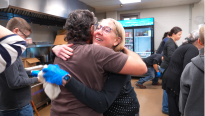
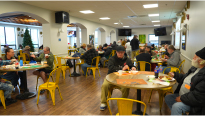
If you stand inside the lobby of the Center for the Homeless, you can feel it — the weight of the stories that arrive at the door before the sun even rises. A mother clutching her child after a night spent in a car. A veteran who once proudly served his country now carries everything he owns in a backpack. A man who has slept outside for so long that stepping indoors feels like stepping into another world. A teenager who has learned to be older than their years, often to know fault of their own. And, a tired woman who hasn’t heard her own name spoken with kindness in months.
For 37 years, these stories are the reason we open our doors to more than 200 people a day who have been living with homelessness. As the largest homeless facility in South Bend, Indiana, we choose every single day to meet these individuals with unwavering help and hope.
Care here is not soft. It is dedicated and unwavering. It is the trauma-informed staff member who sits with someone through a panic attack at 2 a.m. It is the long standing volunteer who learns the names of every child in our hallway. It is the trained coaching specialist who refuses to give up on someone. Care is the belief that no one is too broken, too complicated, or too far gone to begin again.
Education is where the rebuilding begins. Adults relearn the skills life never gave them the chance to master. Children discover that they are capable and worthy of success. A man who once believed he had nothing left to offer walks out of a job‐readiness class with a spark in his eyes. Education here is not about grades — it is about reclaiming a once-lost future.
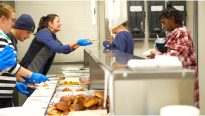
Hunger and thirst are met with dignity. A warm meal is served without judgment. A cup of coffee placed gently into hands that have been shaking from the cold. Food here is more than nourishment, it is a reminder that someone cares whether you eat today.
And then there is shelter — the most basic human need. It might look like a room with a bed with a door that locks, but in reality for our guests, it is a room where trauma can loosen its grip. Shelter is not just a roof with four walls; it is the first breath someone takes when they finally feel safe.
The Center is a living archive of thousands of stories — stories of heartbreak, resilience and transformation. We have seen people move from homelessness to housing, from despair to stability, from invisibility to belonging. While the outcomes can be measured, the human impact cannot.
The truth is simple: no one’s story ends at the Center for the Homeless. Every human being who leaves us carries a new chapter with them — one written with dignity, courage, and hope. And every day, the sun rises and a new story begins the moment someone walks through our doors.
A Path to Independence and Hope
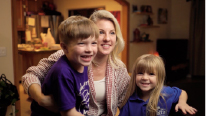
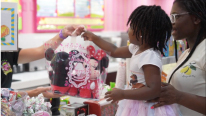
When a mother experiences housing instability, the impact reaches far beyond her. Children feel the uncertainty, routines disappear, and the path toward stability becomes harder to see. CityHouse was created to interrupt that cycle by providing safe housing and comprehensive support for single mothers and their children who are experiencing homelessness or crisis.
CityHouse is a nonprofit residential program that provides stable housing while equipping families with the tools they need to rebuild their lives. Mothers and children live on CityHouse campuses where they receive more than just a place to stay. Each family is surrounded by a community of support that focuses on long-term stability, healing, and independence.
In addition to safe housing, families receive essential supportive services such as mental health counseling, financial literacy and budgeting classes, parenting support, and other life skills designed to help mothers build lasting stability for themselves and their children.
Families entering CityHouse often carry the weight of uncertainty, but within the program, they are met with structure, encouragement, and a community that believes in their future. Through individualized case management, mothers set goals that focus on employment, education, financial stability, and family wellness. Children benefit from a safe environment where they can focus on school, build healthy routines, and grow emotionally in a place that finally feels secure.
Today, CityHouse provides housing and supportive services for 27 mothers and 57 children across its campuses. Through this model, families move from crisis toward stability and independence. Mothers graduate from the program with the life skills, financial knowledge, and confidence needed to maintain housing and provide a secure future for their children. Graduates remain connected through the CityHouse Alumni Care Program, which continues to provide community, guidance, and support.
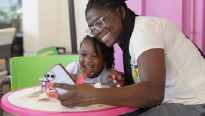
My story is one example of the impact CityHouse can have on a family. I entered the program as a young single mother seeking stability and a safe place for my daughter and me. CityHouse became more than a roof over our heads. It became the place where healing began, where hope returned, and where I was reminded that our story was not defined by our struggles but by the future we could build.
With CityHouse’s support, I was able to focus on my education, build my confidence, and lay a stable foundation for my daughter’s life. I graduated from Florida Atlantic University while in the program and later returned to CityHouse as a staff member. Today, I serve as the Associate Development Director, helping ensure that other mothers and children can access the same support that once changed my life.
When I reflect on my journey, I often think about how CityHouse helped transform what once felt like uncertainty into a story of resilience and gratitude. What began as a search for stability became the beginning of a new future for my family. CityHouse does more than provide shelter. It restores hope, builds community, and helps families believe that a better tomorrow is possible.
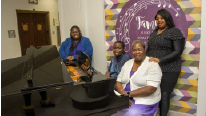
Breaking the Cycle of Generational Poverty
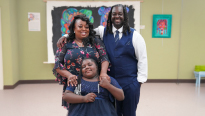
At COTS, we help families break the generational cycle of poverty and homelessness in Detroit. Over half the people we serve each day are children whose education, health, and stability are at risk during their most formative years.
In a city where more than 51% of children are living at or below the poverty line, and thousands of families experience homelessness each year, the need is both urgent and complex. Families are not only seeking shelter, but they are also navigating barriers related to employment, childcare, healthcare access, and systemic inequities that make stability difficult to achieve and even harder to sustain. Without intervention, these challenges compound, impacting long-term outcomes for both parents and children.
COTS responds to this need through a comprehensive, whole-family approach anchored in our Passport to Self-Sufficiency® (PTS) framework. We provide emergency shelter, supportive and affordable housing, early childhood education, and coaching that addresses five key areas of stability: housing, finances, health and well-being, education, and employment. This model recognizes that housing alone is not enough; families need the tools, support, and opportunities to thrive.
The impact of this work is measurable and meaningful. In the past year, COTS served 426 families, reaching more than 1,179 individuals. Beyond providing safe shelter, we supported families in building pathways toward long-term stability, helping parents secure employment, increase income, and access critical resources, while ensuring children receive consistent care, education, and developmental support.
Our outcomes demonstrate that this approach works. Families exiting COTS are more likely to achieve stable housing and less likely to return to homelessness than regional averages. Many increase earned income, strengthen financial stability, and build the skills needed to sustain independence. Through coaching and consistent support, families are not only stabilizing in the moment—they are gaining the capacity to navigate future challenges with confidence, breaking patterns that have persisted for generations.
But our impact goes beyond numbers; it is built through relationships rooted in trust, consistency, and dignity. At COTS, families are supported as partners in their own progress, not defined by crisis. It is seen in the mother who secures permanent housing and stable employment, the child who begins to thrive after experiencing displacement, and the father who gains confidence, reconnects with his family, and builds a plan for the future. Through consistent coaching and support, families begin to see themselves differently—and believe in what is possible. These are the building blocks of generational change.
This work matters because homelessness is not simply about the absence of housing; it is about the absence of opportunity. When families are given the support to stabilize, they are able to reimagine what is possible; not just for themselves, but for their children. By investing in families today, we are disrupting cycles of poverty and creating pathways for future generations to succeed.
At COTS, we believe every family deserves the chance to thrive. Through partnership, innovation, and dedication, we are not just meeting urgent needs but building a future where homelessness is rare and families achieve lasting stability.
More Than Shelter: A Place to Belong
Where is beauty? Already here.
How Everyplace helps refugees turn shelter into home
Munyantore is 82 years old. He was born in the Democratic Republic of Congo and has lived through more displacement than most people will know in a lifetime. Today he lives inside Rwamwanja Refugee Settlement, one of the largest refugee settlements on the African continent.
His shelter keeps him safe from the rain. But what keeps him alive, he will tell you, is the drum.
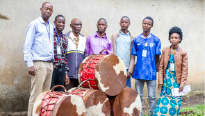
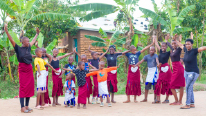
Every week, Munyantore gathers young people to teach them Intore, a traditional Congolese dance he has practiced since childhood. He makes the drums himself, by hand.
When the rhythm starts, something shifts in the camp. Even those who have lost almost everything remember, for a moment, who they are. “It is an art of peacebuilding, social cohesion,” he says, “and it makes people feel happy.”
That happiness is not incidental. It is beauty and its is what transforms a shelter into a home.
Everyplace works with refugee communities around the world through local refugee-led organizations to redesign and improve shelters, camps and settlements, using beauty, design, art, and placemaking to help refugees reclaim beauty, dignity, and belonging in the places where they live.
We begin from a foundational belief: shelter keeps the body alive, but beauty keeps the soul alive. Without both, a place is never truly home.
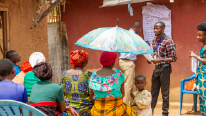
In Rwamwanja, Everyplace partnered with Umoja Hope Restoration to ask one question across seven villages: “Where is beauty here?” The answers: everywhere.
Alphonsine, a young woman in the Camp, founded a cultural dance group when she saw displaced youth losing their identity. “Through our culture, we remember who we are,” she says. “When young people dance and create, they regain identity — their physical and emotional well-being improves.”
Samuel transforms discarded bottles into bags and hats.
Mugenyi plants trees outside his neighbors’ shelters and teaches others to do the same. “When people plant them,” he says, “the community becomes more welcoming and healthy.”
A drum made by hand. A dance that carries memory. Flowers planted beside a mud-brick wall. These are not decorations. They are the acts by which people claim a shelter as their own, the gestures that turn four walls into a place with a name, a feeling, a life inside it. No housing policy alone can do that. Beauty can.
Everyplace’s model starts where others rarely do: by asking communities what is already beautiful. From that foundation, communities co-design a transformation plan, and lead the physical improvement of their shelters. Because when a shelter carries the marks of the people inside it — their art, their music, their care — it stops being temporary. It becomes home.
Munyantore’s shelter is modest. But when the drums start and the young people of the camp begin to move, he is home. That is the transformation Everyplace is committed to making possible, for him, and for the millions of displaced people who deserve not only a roof over their heads, but a place that is truly theirs.
A Life Rebuilt with Dignity
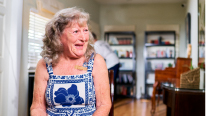
Vickie never imagined she’d be homeless.
For years, she’d worked as a home health nurse, caring for an elderly gentleman with the same gentle competence she’d brought to every patient throughout her career. She lived in his home, providing round-the-clock care, finding purpose in making his final years comfortable and dignified. It was honest, meaningful work and it kept a roof over her head.
Then everything fell apart through no fault of her own.
When her patient suffered a fall and required extended rehabilitation, the house went into foreclosure. Suddenly, Vickie found herself packing her life into her aging sedan, driving north with hope growing thinner with each mile. She was searching for someplace affordable or to reunite with family or friends.
The red and blue lights in her rearview mirror seemed routine at first. Just a broken taillight. But when the officer asked for her license and registration, Vickie’s stomach dropped. Expired. In the chaos of losing her home, she’d missed the renewal.
Her car was impounded. She spent the weekend in jail. When she was released with nothing but a bus pass back to Palm Beach County, the full weight of her new reality crashed down. Everything she owned was gone with the car she couldn’t afford to retrieve.
At 57, Vickie was homeless.
For three months, she lived on the streets of West Palm Beach. The nights were the worst—long hours of fear and vulnerability as an older woman alone in the darkness. She had no one to call and no safety net to catch her. The street showed her a side of humanity she’d never imagined, and taught her a terror she’d never known.
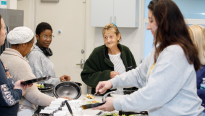
Then someone told her about The Lord’s Place, where we could offer her housing at Burckle Place, and for the first time in months, Vickie felt safe. She began rebuilding, slowly regaining the confidence that homelessness had stripped away. She was making progress, and finding herself again.
That’s when the diagnosis came: stage four metastatic lung cancer.
It was devastating news that would have destroyed someone with less support. But The Lord’s Place didn’t abandon her. We kept her safe, ensured she received the medical care she desperately needed, and gave her community when she needed it most. Vickie was a model resident and a friend to others experiencing homelessness, proof that dignity and kindness survive even the hardest circumstances.
Today, Vickie is a graduate of The Lord’s Place, living independently in a studio apartment in West Palm Beach. Her journey embodies why this work matters—homelessness can happen to anyone.
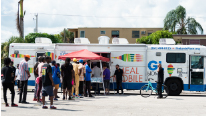
The Lord’s Place serves 2,200 people annually in their journey out of homelessness, half of them women. Through housing like the Burckle campuses for single homeless women, and wraparound services including job training, clinical support, and street outreach, we maintain a remarkable 96% housing retention rate.
Vickie’s story reminds us that behind every statistic is a person who deserves safety, dignity, and hope.

The Catholic Initiative

Humanitarian Hotels